See a Laser Dentist for a Painless Treatment
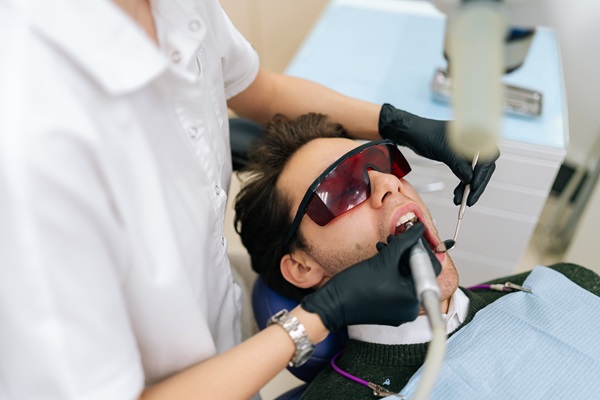
A laser dentist can perform dental procedures with better accuracy and effectiveness. Read on to learn about laser dentistry and how it can help make some treatments more comfortable. The field of dentistry has witnessed significant advancements in the last few years. New technologies are transforming what dentists are able to offer their patients, from sedation procedures that ease anxiety to laser dentistry for virtually pain-free dental treatment.
What is a laser dentist and can they make treatments painless?
Laser dentistry is a cutting-edge form of dentistry that is revolutionizing the way people think about dental treatments. For example, when patients visited the dentist for oral surgery or other dental care in the past, they frequently anticipated pain, bleeding, and other side effects. Today, laser dentistry has enabled patients to stay comfortable and calm during dental procedures.
Laser dentistry is a painless, minimally invasive procedure that usually does not require an anesthetic or stitches. Furthermore, there is seldom any bleeding, and the laser is practically silent, so there are no drilling or spinning sounds, which are sometimes linked with uncomfortable dental procedures for some patients.
For the laser dentist to complete precise dental operations, they will use a powerful beam of light energy. They are simple to handle and allow dentists to cut or vaporize tissue on touch, remove soft tissues from the gums, and remove decayed tissue in the teeth. Since the high-energy laser beam cauterizes as it works, blood loss is reduced, shortening the recovery period and the need for over-the-counter pain relievers.
Why laser dentistry is painless
Traditional methods are far more intrusive than this high-energy laser technology. Today, many dental treatments are no longer performed using drills and scalpels, minimizing the need for anesthetic. Laser dentistry even makes biopsies and cavity fillings painless.
All treatments are conducted with excellent accuracy to preserve the surrounding tissues, and there are no sutures to deal with after the procedure. Additionally, lasers sterilize as they work, lowering the chance of unpleasant bacterial infections.
Applications of laser dentistry
Laser dentistry is most commonly utilized for gum treatments, though it may be used on hard and soft tissue. Some of the following conditions can be treated using laser dentistry: gum disease, gum inflammation, gingivectomies, gum reshaping, and cavities. Laser dentistry can also assist with crown preparation, inlays, onlays, treat root canal infection, removal of old fillings, and wisdom tooth treatment.
The safety of laser dentistry
Laser dentistry is safe for individuals who are afraid of dental operations, including children. Laser dentistry is frequently used to address dental issues in children. The laser is a groundbreaking device that will make children look forward to going to the laser dentist. Both children and adults typically prefer no-drill, no-shot laser dentistry.
Ready to schedule an appointment?
A laser dentist can give you a comfortable, nearly painless dental experience, thanks to laser dentistry. To book an appointment and learn more about laser treatments, contact our dental office today.
Request an appointment here: https://www.jamaicadentalny.com or call Jamaica Queens Dental at (718) 416-6427 for an appointment in our Richmond Hill office.
Check out what others are saying about our dental services on Yelp: Laser Dentistry in Richmond Hill, NY.
Related Posts
Considering Invisalign® after a tooth relapse? In orthodontics, a tooth relapse occurs when the teeth go back to being crooked after braces treatment. When this happens, it can be easy to want to just ignore it and move on; however, oral health and hygiene are both put back at risk when the teeth are crooked.…
An abscessed tooth is a painful and serious dental condition that requires immediate care from an emergency dentist. This condition develops when a bacterial infection forms inside the tooth or gum, leading to swelling, pain, and sometimes fever. Without prompt treatment, the infection can spread to other areas of the body, making early intervention critical…
Tooth implants, or dental implants, are a common tooth-replacement option that uses an abutment and a prosthetic, such as a crown, bridge, or fixed dentures. There are three parts to the tooth implant process; however, surgery is required only for the placement of the implants. The other parts involve preparation and restoration. The word "surgery"…
A root canal restores a damaged or infected tooth without removing it, and recovery usually proceeds smoothly with the right care. Mild tenderness is common as the tissues calm down, especially when chewing or when the tooth is touched. Good oral hygiene, smart food choices, and timely follow-up help the tooth feel normal again. Because…